

Aircraft categories provide a starting point for selecting a business aircraft charter. They do not guarantee a specific cabin, range, baggage volume, runway requirement, or onboard feature.
The final aircraft selection depends on the exact tail, passenger count, baggage, route, airport conditions, weather, availability, and operator requirements. HighGrade Charters acts as an aviation advisor and charter broker. Aircraft are supplied and operated by third-party FAA-certified providers.
Aircraft categories are planning guides
The following ranges represent general industry planning bands:
| Category | Typical passengers | Typical range | Cabin profile | Typical baggage volume |
|---|---|---|---|---|
| Turboprop | 5–9 | 700–1,500 nautical miles | Usually non-stand-up | 40–60 cu. ft. |
| Light jet | 4–8 | 1,000–2,000 nautical miles | Usually seated-height | 40–80 cu. ft. |
| Midsize jet | 6–9 | 1,750–3,000 nautical miles | Usually stand-up | 70–100 cu. ft. |
| Super-midsize jet | 8–12 | 3,000–4,200 nautical miles | Full stand-up | 100–150 cu. ft. |
| Heavy jet | 10–16 or more | 3,500–6,000+ nautical miles | Large-cabin, stand-up | 150–250+ cu. ft. |
These figures are not specifications for every aircraft in a category. A particular light jet may have more baggage space than an older midsize aircraft. A smaller super-midsize jet may have less cabin volume than a large-cabin aircraft. Model-specific data must be confirmed before booking.
Turboprops: practical access for short missions
A turboprop can be the practical choice when airport access, short routes, or operating efficiency are the primary requirements.
Typical turboprop missions include:
- Short regional flights
- Remote destinations
- Airports with shorter runways
- Airports with limited jet access
- Routes under approximately 500–600 nautical miles
- Trips where baggage volume is moderate
- Missions requiring a lower cabin-cost profile
Executive turboprops commonly seat five to nine passengers. The cabin may include club seating, a small refreshment area, and a lavatory. Cabin height is generally below a full stand-up jet cabin, although the exact configuration varies.
Turboprops can provide access to airports that may not be suitable for many light jets. Runway length, elevation, temperature, surface condition, obstacles, aircraft weight, and fuel requirements must still be evaluated by the operator. A short runway is not automatically suitable for every turboprop.
For short regional missions, a turboprop can reduce total travel time if it allows arrival at an airport closer to the destination. The higher cruise speed of a light jet may not offset a longer ground transfer from a larger airport.

Light jets: regional speed and airport flexibility
Light jets typically carry four to eight passengers. They are commonly used for:
- Short domestic flights
- Regional business travel
- Small executive groups
- Same-day meetings
- Routes between approximately 1,000 and 2,000 nautical miles
- Missions where jet speed is more important than cabin height
Most light jets have a seated-height cabin. Passengers may have limited ability to stand or move through the cabin. Lavatories are common, but their size and location differ by model. Some aircraft have a basic refreshment center rather than a full galley.
Baggage space varies considerably. A light jet may accommodate standard luggage for a small group, but large cases, sports equipment, musical instruments, production equipment, or oversized items may reduce the available passenger load.
A light jet may be suitable when the origin and destination airports have adequate paved runways and the route length justifies the higher speed. A specific aircraft may still face payload restrictions at a high-elevation airport or during hot weather.
Midsize jets: a balanced cabin for domestic travel
Midsize jets are often used as a general-purpose aircraft category. Typical missions include:
- Longer domestic flights
- Coast-to-coast routes with limited payload
- Six- to nine-passenger groups
- Business trips requiring work space
- Trips requiring a stand-up cabin
- Routes between approximately 1,750 and 3,000 nautical miles
A typical midsize cabin may be approximately 17–20 feet long, 5.5–5.9 feet high, and 5.5–6 feet wide. Exact dimensions depend on the aircraft model and interior configuration.
Midsize aircraft commonly include:
- Stand-up cabin access
- Enclosed lavatory
- Refreshment center or galley
- Club seating
- Forward or aft baggage storage
- Moderate luggage capacity
A midsize jet may provide a more usable cabin than a light jet without requiring the runway length or operating profile of a heavy aircraft. However, range changes with passenger count, baggage, fuel reserves, winds, routing, and alternate-airport requirements.
Super-midsize jets: more cabin, range, and separation
Super-midsize jets generally carry eight to twelve passengers and are used for longer domestic and selected international missions.
Common requirements include:
- Transcontinental travel
- Long domestic sectors
- Large executive groups
- More baggage
- Stand-up movement throughout the cabin
- Increased separation between seating areas
- Full galley and enclosed lavatory access
Typical cabins are approximately 25–30 feet long, 6 feet high, and 6.5–7 feet wide. Many aircraft provide a forward galley, multiple seating zones, improved baggage capacity, and a larger lavatory.
Super-midsize jets are often selected when the mission requires a combination of cabin space and range. They may also provide more flexibility for passengers carrying work materials, golf equipment, event supplies, or multiple pieces of luggage.
The category does not guarantee transatlantic capability. A specific aircraft may be able to fly a particular international route only with a reduced passenger load, favorable winds, or a fuel stop. The operator must confirm the route using current performance calculations.
Heavy jets: large-cabin and long-range missions
Heavy jets are used when the mission requires the greatest combination of cabin volume, baggage capacity, passenger count, and range.
Typical uses include:
- International travel
- Long-haul domestic routes
- Groups of ten or more passengers
- Multi-zone seating
- Sleeping arrangements
- Large catering requirements
- Significant baggage or equipment
- Long periods onboard
Heavy jets often provide cabins exceeding 30 feet in length, with heights around six feet or more. Configurations may include separate seating areas, divans, enclosed lavatories, full galleys, crew rest areas, and additional storage.
Baggage access is a key consideration. A large cabin does not always mean every item can be loaded. The shape of the baggage compartment, door dimensions, maximum compartment weight, and passenger payload must be confirmed for the specific tail.
Cabin configuration matters more than the category label
A category label does not confirm the details that affect the passenger experience. Before booking, verify:
- Number of passenger seats
- Seat layout
- Cabin length, width, and height
- Stand-up capability
- Lavatory location and configuration
- Galley or refreshment-center equipment
- Baggage compartment volume
- Baggage door dimensions
- In-flight connectivity
- Power outlets
- Cabin noise and environmental controls
- Pet, cargo, or special-equipment requirements
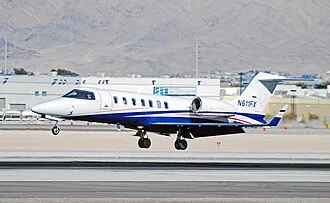
The Learjet 45XR aircraft profile illustrates why tail-specific information is required. Although it is often discussed alongside light jets, the 45XR is classified as a super-light aircraft. The listed aircraft profile includes seven to eight seats, approximately 1,800 nautical miles of representative range, a low-aisle cabin with limited standing height, and an aft baggage area. "Stand-up cabin" is a marketing term and should not be assumed from category language alone. Cabin dimensions and usable standing height should be verified for the specific tail number. These details apply to that aircraft profile and should not be applied to every aircraft described as a light or super-light jet.
Aircraft age and refurbishment
Calendar age is only one part of the cabin assessment. A properly maintained aircraft with a recent refurbishment may provide a more current cabin than a newer aircraft with its original interior.
Industry reporting identifies several common refurbishment cycles:
- Soft goods, including carpet and upholstery, may be replaced after approximately five to eight years.
- More extensive cabin upgrades often occur around major maintenance events.
- Large-cabin aircraft frequently receive significant refurbishment near the first major inspection period, often around ten to twelve years.
Refurbishment may include:
- New upholstery and carpeting
- Refinished cabinetry
- Updated lighting
- Improved cabin management systems
- New connectivity equipment
- Galley modifications
- Lavatory updates
- Exterior paint
The aircraft’s maintenance status, inspection history, cabin condition, and operator oversight remain separate considerations. A recent interior does not replace the need to evaluate the aircraft and operator.
Range and runway figures are planning estimates
Published range usually reflects standardized conditions. Actual mission performance depends on:
- Passenger and baggage weight
- Fuel reserves
- Alternate-airport requirements
- Wind and routing
- Temperature
- Airport elevation
- Runway length and slope
- Runway surface and condition
- Takeoff and landing limitations
- International operating requirements
The FAA identifies density altitude as a factor that can increase takeoff and landing distances. Hot temperatures and high field elevations can reduce aircraft performance. Runway analysis must use the aircraft’s approved performance data and the operating conditions for the planned flight.
For this reason, a planning range should not be treated as a guaranteed nonstop distance. HighGrade advisors use the requested itinerary, passenger count, baggage requirements, airport options, and operator feedback to identify aircraft that fit the mission.
The role of the aviation advisor
HighGrade Charters does not operate aircraft. It evaluates available aircraft through a network of FAA-certified operators and coordinates the charter process.
The Part 135 certificate holder remains responsible for operational control. Under 14 CFR § 1.1, operational control means “the exercise of authority over initiating, conducting or terminating a flight.” Under 14 CFR § 135.77, each certificate holder is responsible for operational control and must identify authorized personnel in its required manual.
HighGrade Charters supports aircraft selection, itinerary planning, operator coordination, ground arrangements, catering, protection coordination, and other requested logistics. The final aircraft, operator, seating, cabin layout, performance, and availability are confirmed before booking.
Sources and references
- Federal Aviation Administration: Pilot’s Handbook of Aeronautical Knowledge
- FAA: Aircraft Performance and Calculations
- FAA: Density Altitude
- Aviation Week: Business Aircraft Post-Pandemic Modifications
- Business Jet Interiors International: End Game
- 14 CFR § 1.1: General Definitions
- 14 CFR § 135.77: Responsibility for Operational Control